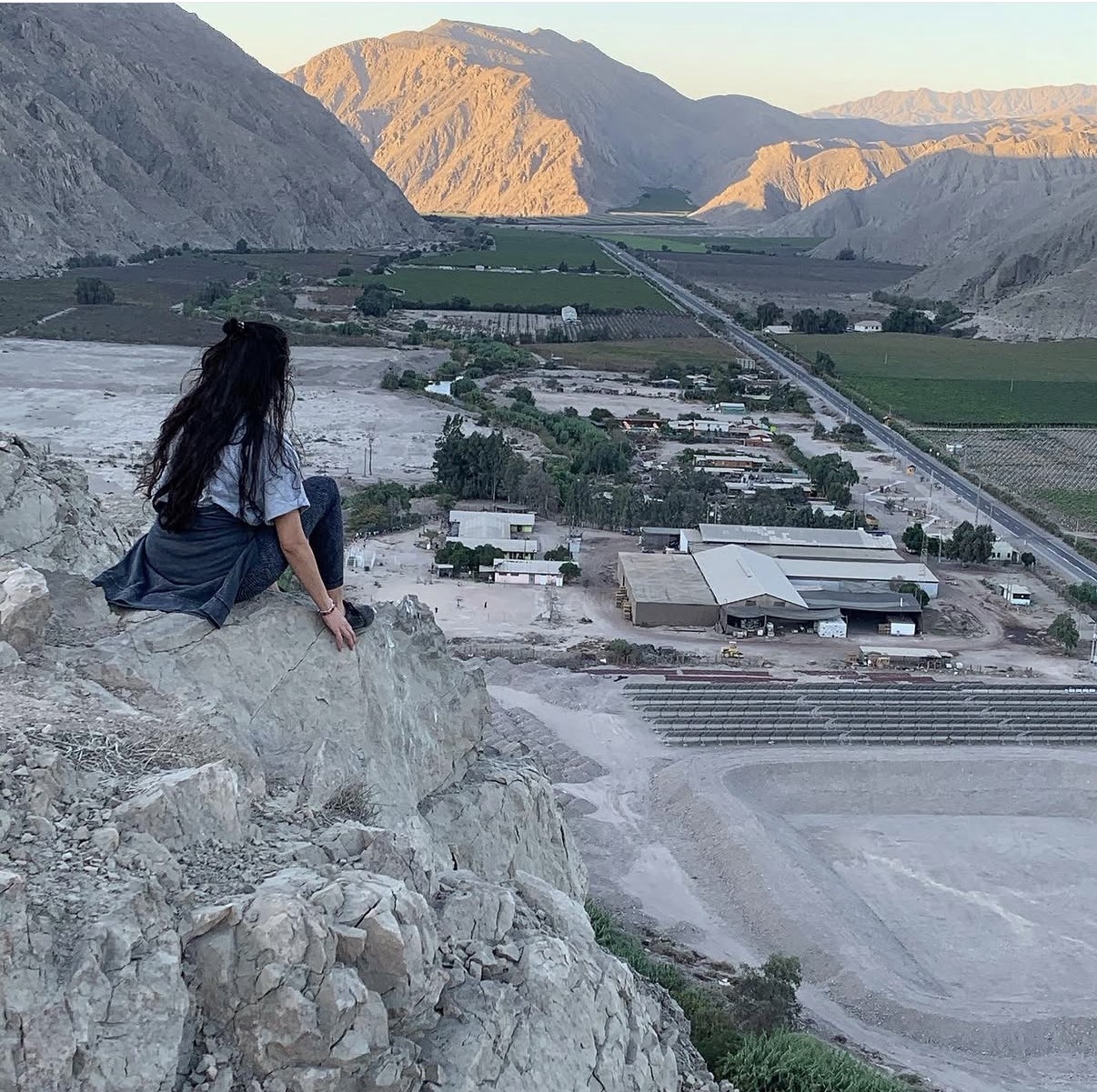
I was born in Chile, and I live in Sydney.
I know a little about waking up somewhere that doesn't yet feel like home.
The light comes in at a different angle. The birds sound wrong. The words don't come easily, and the jokes don't land. You reach into the cupboard for something and it isn't there, because this isn't that kitchen. You're tired in a way nobody around you seems to notice.
That is the closest I can come to describing grief.
The world we lose
When someone we love dies, we don't only lose them. We lose the world we shared with them.
The Sunday phone call. The way they said our name. The particular silence of sitting in the car together. The little face at the window when we pulled into the driveway.
That world was built over years, out of habits so small we never noticed them. Then, overnight, it's gone, and we're living somewhere new. No map. No say in the matter. And everyone around us still speaking the old language as if nothing has changed.
Jung and the descent
Carl Jung wrote about a pattern he saw in myths from all over the world, which he called the night sea journey. The hero is swallowed by a whale or a monster, or travels down into the underworld. They spend a long, dark time there. And they come back up changed.
Jung saw this as a picture of what happens inside us during great upheaval. Something old has to end before something new can grow. He didn't see the darkness as a detour from life. He saw it as part of becoming whole, a process he called individuation.
I'm careful with this idea, because grief is not a self-improvement project. Nobody should be told that their loss happened so they could grow. Sometimes death is simply cruel and unfair.
But I do find comfort in the thought that the descent is ancient and human. People have always gone down into this place. Many have found their way back up, carrying something they didn't have before. Not a lesson, exactly. More like a deeper way of loving.
Learning the new country
This new place has its own strange geography.
It has its own weather. Some days are clear and you feel almost normal. Some days fog rolls in out of nowhere, usually in the cereal aisle or at a red light.
It has hidden landmarks. The first birthday. The first Christmas. Their song playing in a café. You learn where these are mostly by walking straight into them.
You move back and forth. Grief researchers Margaret Stroebe and Henk Schut describe healthy grieving as an oscillation. Some days we turn towards the loss: we cry, remember, sort their things. Other days we turn towards ordinary life: we go to work, laugh at a show, plant something. Both are part of grieving. You don't have to do it in a straight line.
People will ask when you'll be back. Kindly, they'll wonder when you'll be your old self again. You won't, not quite. You can't return to that place. But slowly you learn to live in this one.
Your first language stays with you
When you move countries, you don't forget the language you grew up speaking. It lives in you. It comes out when you're tired, or dreaming, or talking to a baby.
Love is like that too. It doesn't disappear when someone dies. You just find new ways to speak it. Saying their name out loud. Cooking their recipe on a Sunday. Lighting a candle on their birthday. Telling their story to someone who never met them.
One street at a time
Nobody settles into a new country in a week. Or a year.
You learn it one street at a time. One day you realise you got to the shops without needing the map. Another day, you laugh properly at something, and it doesn't feel like a betrayal.
That isn't moving on.
It's carrying them with you into the place you live now.
If you're new to this country and struggling to find your bearings, you don't have to walk it alone. I offer one-to-one support, and the Soft Landing Circle meets every month for anyone missing someone.
carolina x